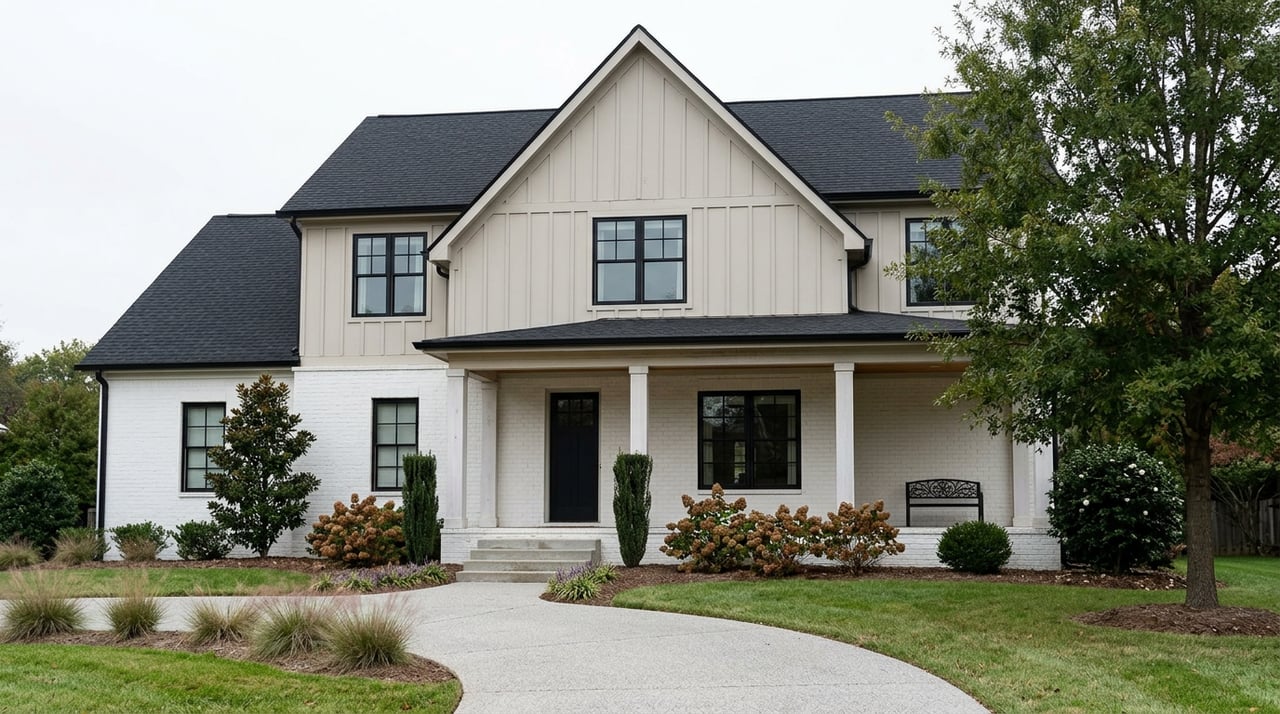
Holly Springs Isn't Short on Homes. It's Short on Built Ones.
September 10, 2026
September 10, 2026
How does a city's median home sale price drop 6.6 percent in a year while the price per square foot climbs almost 10 percent at the same time? That is exactly what happened in Holly Springs in July 2026, when the median closed sale slid to $640,000 even as the price per square foot rose to $249. Nothing about the town got cheaper. What changed was which homes closed.
That contradiction is the whole story if you are comparing Holly Springs to Apex, Fuquay-Varina, or anywhere else in the Triangle right now. The median price you see on a portal is an average of whatever happened to sell that month, and in a town where some neighborhoods are moving in under three weeks while others sit for six, that average tells you almost nothing about what your money buys on any given street.
Pull the numbers by neighborhood and the gap is hard to miss. In a spring 2026 snapshot of active listings, four established Holly Springs communities looked like this:
| Neighborhood | List price | Days on market |
|---|---|---|
| Twelve Oaks | $887,000 | 20 |
| Sunset Ridge | $775,000 | 17 |
| Holly Glen | $535,000 | 38 |
| Woodcreek | $492,500 | 40 |
Twelve Oaks and Sunset Ridge are moving in under three weeks. Holly Glen and Woodcreek are sitting for nearly six. That is not a small variance for two ends of the same zip code, and it is the kind of split a citywide median simply averages away.
Here is the part that doesn't show up on any listing portal. Holly Springs' Fiscal Year 2026-27 budget message, published by the Town this spring, reports that single-family and townhome building permits fell to under 300 in 2025. The town's 10-year average is 600. That's less than half the typical pace.
At the same time, the same budget document reports that roughly 5,200 residential units already have approval and simply have not been built yet.
Read those two numbers side by side and the tight neighborhoods start to make more sense. Twelve Oaks and Sunset Ridge are largely built out. There isn't new supply landing inside those boundaries to compete with a resale listing, so a well-priced home there still draws multiple offers even in a slower year. Meanwhile the parts of town where that 5,200-unit pipeline is aimed haven't felt the squeeze the same way, because the supply story there isn't about scarcity. It's about timing.
The Town's budget message points to higher interest rates and broader market conditions as the reason permits slowed, not a loss of appetite for building here. That distinction matters. A permit slowdown caused by financing costs is not the same as a town running out of land or approvals. The approvals are sitting in the queue. They get pulled the moment the math works again for a builder.
The geography isn't a mystery either. The Town has been widening Avent Ferry Road specifically because of growth in western Holly Springs, where development has expanded fastest and school traffic has climbed with it. The current phase, a four-lane median-divided widening between Ralph Stephens Road and Cass Holt Road, carries a project budget up to $20.2 million funded through NCDOT, with right-of-way acquisition anticipated to begin in 2027. The Town held a public design meeting on the project in June 2026 to walk residents through early design maps and gather feedback as the work continues.
That corridor sits closer to where new rooftops are likely to land than to Twelve Oaks or Sunset Ridge. If you are comparing a built-out neighborhood to one still filling in, the road projects are one of the clearest signals of which is which. A town doesn't spend $20 million widening a road for traffic that already peaked.
One more number belongs in this comparison, and it has nothing to do with permits. Wake County's 2024 property revaluation, the last one completed, raised Holly Springs residential values by an average of 58 percent, among the higher increases of any municipality in the county alongside Apex and Garner, and behind only Rolesville. The next revaluation takes effect January 1, 2027, which is a little over a year from now.
That timing matters for anyone weighing a purchase or a sale between now and then. A buyer closing on a Holly Springs home this fall is buying at pre-2027 assessed values. A seller listing now is doing so before the next reassessment resets the baseline for everyone who owns after them. Neither fact should be the deciding factor in a transaction, but both belong in the conversation, especially for anyone comparing carrying costs against a neighboring town on a different revaluation clock.
If you're cross-shopping Holly Springs against another Triangle town, or cross-shopping inside Holly Springs itself, the question worth asking isn't "what's the median price." It's "is this pocket built out, or is it downstream of that 5,200-unit pipeline."
A built-out neighborhood like Twelve Oaks or Sunset Ridge behaves like a scarcity market because it functionally is one. There's no new construction inside those boundaries competing with a resale listing, so pricing power stays with sellers even as the citywide numbers soften. A neighborhood closer to the western growth corridor is playing a different game. Prices there may look more approachable today precisely because more supply, already approved, is still working its way toward a closing table.
Neither situation is better or worse. They call for different strategies. A buyer chasing a built-out neighborhood should expect to compete on the first weekend. A buyer with more flexibility on timeline might do better watching the western corridor, where today's asking price has more room to move before the next wave of permits gets pulled.
Does a permit slowdown mean Holly Springs prices are about to fall? Not necessarily. The Town's own budget message ties the slowdown to interest rates and national conditions, not a loss of demand, and total real estate value in Holly Springs has still grown more than 7 percent annually on average since 2020. The slowdown affects how fast new supply arrives, not whether it eventually does.
Which Holly Springs neighborhoods are still filling in versus already built out? Twelve Oaks and Sunset Ridge read as largely built out based on current inventory and pace. Areas nearer the Avent Ferry corridor in western Holly Springs are closer to where the town's approved-but-unbuilt pipeline is concentrated, based on the Town's own infrastructure planning.
When does the next property revaluation happen, and should it affect my timing? Wake County's next revaluation takes effect January 1, 2027. It won't change a purchase decision on its own, but it's worth factoring into a longer-term cost comparison if you're choosing between towns on different assessment cycles.
None of this replaces a walk through the actual comps on your actual street. It just means the median price on a portal was never going to answer the question you're really asking, which is what happens next in the specific pocket of Holly Springs you're looking at.
If you want to talk through which side of that pipeline your target neighborhood sits on, Judy Johnson has been working Holly Springs and the surrounding Johnston and Wake County markets long enough to read those differences street by street. Let's Connect.
Stay up to date on the latest real estate trends.
Get assistance in determining current property value, crafting a competitive offer, writing and negotiating a contract, and much more. Contact Judy today to discuss all your real estate needs!