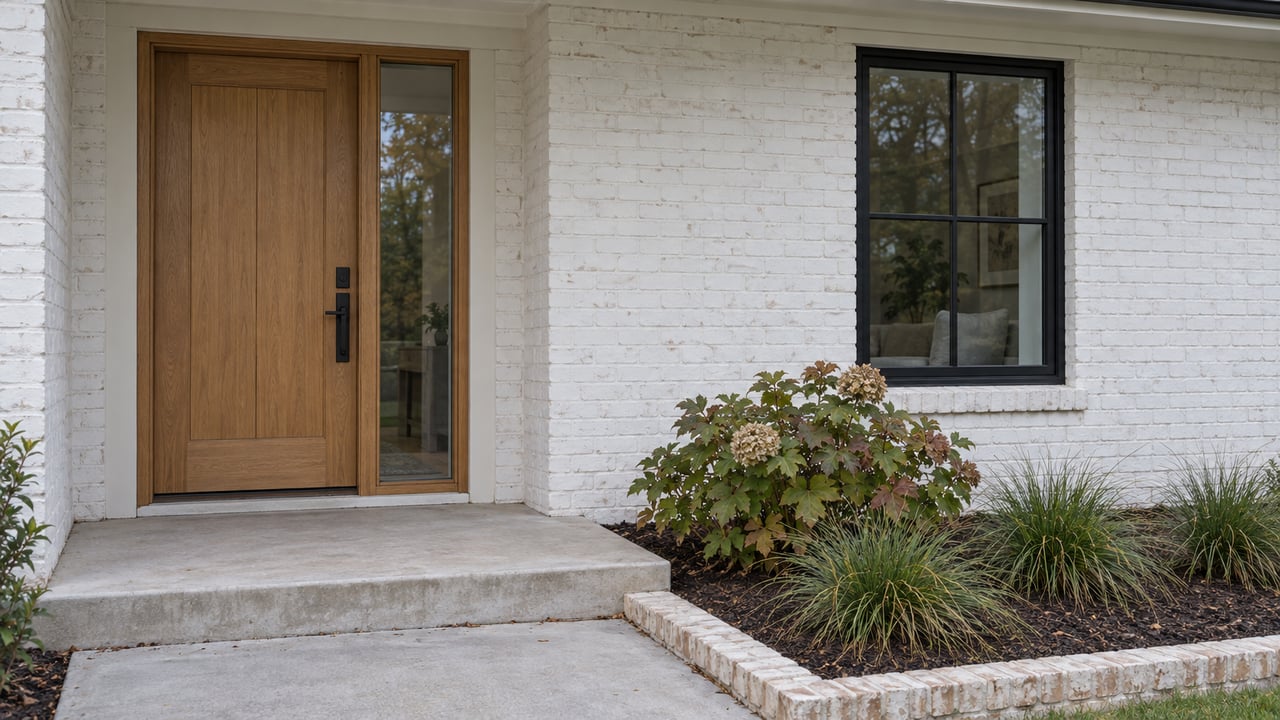
Clayton NC New Construction Home Warranties: What Protects You
October 1, 2026
A buyer closes on a new build in Flowers Plantation in October. By the following August, hairline cracks have opened along two window headers and a bathroom exhaust fan has started rattling on high speed. The buyer calls the builder, confident that state law backs a one-year warranty on new construction. It doesn't. North Carolina has never required a builder to offer one.
That single gap between what buyers assume and what the law actually says shapes almost every new-construction closing happening right now across Clayton's active communities, from D.R. Horton's Lawson Glen off Ranch Road to True Homes' North District townhomes going up next to Flowers Plantation's still-unbuilt Waterfront District. The protection a buyer ends up with depends entirely on which builder they signed with and what that builder chose to put in writing, not on a floor set by Raleigh.
The NC REALTORS legal education team has fielded this exact question directly: does North Carolina law obligate home builders to provide a one-year builder's warranty? The answer they publish is no. Builders may offer a written warranty, and most do, but nothing in state law compels them to.
A construction attorney writing in the North Carolina State Bar Journal went further, describing how often he hears general contractors state the opposite as settled fact. He traced the confusion to a real legal concept, the implied warranty of workmanlike construction first recognized by the state's Supreme Court in the 1970s, layered on top of an industry habit of offering roughly a year of coverage as standard practice. The two get treated as the same thing. They aren't. Parties to a North Carolina construction contract are free to negotiate away the implied warranty entirely, which means a buyer who assumes protection exists because "that's the law" may find out otherwise only after a problem shows up.
Two different layers of protection exist for a Clayton new-construction buyer, and they don't work the same way.
The first is whatever express warranty the builder puts in the contract. If the transaction uses the NC Bar Association and NC REALTORS joint forms, either the New Construction Addendum (Form 2A3-T) or the Offer to Purchase and Contract for New Construction (Form 800-T), that paperwork includes a Limited Warranty of Construction obligating the builder to repair defects from faulty construction, labor, or materials for one year. A builder can also write its own warranty language instead, with its own terms, exclusions, and deadlines. Nothing requires the two to match.
The second layer is the implied warranty that exists whether or not any paperwork mentions it. North Carolina courts have held that builders give an implied guarantee that a home is habitable and built in a workmanlike manner, a principle that traces back through cases like Hartley v. Ballou. This warranty only covers latent defects, meaning problems that weren't visible to a reasonable buyer at the time of purchase, and enforcing it typically means proving your case rather than filing a simple warranty claim. Sodoma Law's construction group notes that claims under the implied warranty of habitability generally must be brought within six years of substantial completion or the builder's last act, whichever is later, while a separate line of sources describes a three-year window tied to the general statute of limitations for breach of contract claims. The exact window depends on how the claim is framed and is worth confirming with an attorney rather than assuming either number applies automatically to your situation.
Clayton's new-construction inventory right now spans enough builders that the difference isn't theoretical. D.R. Horton is building at Lawson Glen. Smith Douglas Homes has an active community at Wellesley. Eastwood Homes is building Castlewood on tree-lined lots near downtown. Fischer Homes is selling its Masterpiece Collection floor plans at Watson at Flowers Plantation. True Homes is building townhomes at North District, positioned as the only residential community sitting directly against the site of the planned Waterfront District.
Five builders operating in the same county, often within a few miles of each other, each writing their own warranty terms into their own contracts. A buyer comparing a D.R. Horton home against a Fischer Homes home isn't just comparing floor plans and price per square foot. They're comparing two separate promises about who fixes what and for how long, and neither promise is standardized by the state.
The same habit of reading the actual document instead of the surrounding narrative shows up again a few hundred yards from North District's model homes.
Flowers Plantation's Waterfront District has been described publicly since at least 2023 as a mixed-use development bringing condos, retail, and a hotel to the intersection of Buffalo Road and NC-42. As of August 2026, Flowers Plantation's own website still describes the district as being in the planning stage, and its shop and dine map labels it "coming soon." At the same time, a handful of businesses, including a Panera Bread and Waterfront Dental Care, already appear on the community's current list of open tenants within that same footprint. Both things are true at once. Some retail has opened. The marquee residential, hospitality, and neo-urban core the renderings promise has not.
North District's townhomes are on sale today, and the Waterfront District around them is being built in phases. Some retail is open, and the condos, hotel, and waterfront dining remain in the planning stage as of August 2026. Timelines on large mixed-use projects can shift, so the purchase contract, the HOA documents, and the businesses open today are the clearest picture of what a townhome buyer is getting. The same is true of a builder's warranty, where the written document tells you exactly what is promised.
Because the one-year window most builders offer is a choice rather than a mandate, the single most useful thing a Clayton buyer can do is treat that window as a deadline rather than a formality.
Independent home inspectors across the Raleigh area commonly recommend scheduling a full inspection near the ten or eleven month mark, timed deliberately to land before the builder's express warranty closes. The idea is straightforward: minor issues like settling drywall seams, an HVAC system running inefficiently, or a door that no longer latches cleanly often don't show up until a home has been lived in through a full season or two. An inspection scheduled early in year one misses them. An inspection scheduled after the warranty has already lapsed finds them too late to matter.
For anyone pulling permits or scheduling municipal inspections directly, the Town of Clayton's Inspections Department handles building permit review and compliance inspections for all construction activity inside town limits, a separate process from the private builder warranty inspection but worth knowing about if questions come up about what was actually permitted and approved.
None of this means one builder in Clayton is better or worse than another. It means the warranty section of a new-construction contract deserves the same scrutiny buyers usually reserve for price and floor plan, because it is the one part of the deal that varies most by builder and matters least until something breaks.
Before signing, it's worth asking to see the actual warranty document rather than relying on a sales representative's summary of it. It's worth comparing that document against the NC Bar and NC REALTORS standard form language, since a builder using its own warranty may offer more or less than the one-year repair standard that form sets out. And it's worth marking a calendar reminder for month ten, regardless of which builder is involved, because that's the window that determines whether a defect becomes the builder's responsibility or the homeowner's.
Does my builder's contract include the NC Bar's standard Limited Warranty of Construction language, or its own custom warranty? The two can differ meaningfully in scope and duration, and only reading the actual clause tells you which one you have.
What happens after the express warranty ends? The implied warranty of habitability still exists, but pursuing it typically means demonstrating the defect was latent and working through arbitration or litigation rather than a simple repair request, so understanding this in advance changes what "warranty coverage" really means for the life of the home.
Has anyone scheduled an independent inspection before month eleven? This is the practical step that turns a legal concept into an actual repair, and it's the one most easily forgotten during the excitement of a first year in a new home.
None of this is legal advice, and any specific dispute over a Clayton new-construction contract is worth a conversation with a construction attorney who can look at the actual paperwork involved.
Comparing new construction in Clayton, or trying to figure out what a builder's warranty actually covers before you sign, is exactly the kind of question Judy Johnson is glad to walk through with you. Let's Connect.
Stay up to date on the latest real estate trends.
Get assistance in determining current property value, crafting a competitive offer, writing and negotiating a contract, and much more. Contact Judy today to discuss all your real estate needs!