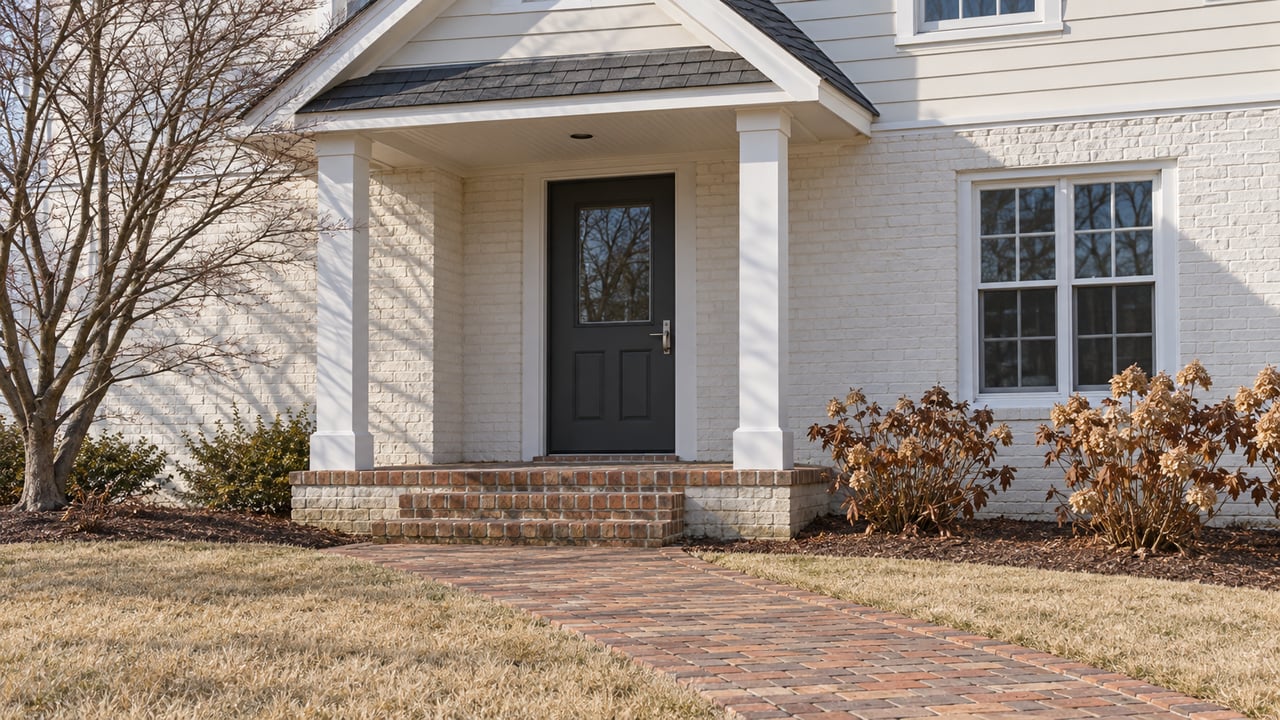
Buy a Raleigh Home This Winter and Your Tax Bill Is Still Priced on 2024. January Changes That.
October 22, 2026
October 22, 2026
Wake County's last revaluation took effect January 1, 2024. Since then there has been a cooling market and a new pair of tax rates. The next revaluation takes effect January 1, 2027.
Wake County's revaluation timeline runs on fixed dates, and most of them fall within months of a winter closing.
| Date | What happens |
|---|---|
| Sept. 1, 2026 | Current bills come due, based on Jan. 1, 2024 values and rates adopted in June 2026 |
| Jan. 19, 2027 | Revaluation results go to the Board of Commissioners |
| By Jan. 22, 2027 | Owners start receiving new notices of assessed value |
| June 2027 | Elected officials adopt new tax rates |
| Sept. 1, 2027 | First bills come due using Jan. 1, 2027 values |
The new assessed value arrives without a rate attached. The county states plainly that revaluation updates assessed values and does not set the tax rate, and that the effect on any one bill can't be known until the rate is set.
For 2026, Wake County's rate is 53.71 cents per $100 of assessed value and the City of Raleigh's is 37.20 cents, for a combined 90.91 cents before any fees or special-district taxes. The News & Observer reported in October that the median assessed value of a Raleigh home is $391,000, which puts this year's bill at nearly $3,600.
In the last revaluation, effective January 1, 2024, residential values in Raleigh rose 52% and overall property values in the city rose 48%, according to WRAL's report on the results. Across Wake County, residential values rose an average of 53%, The News & Observer reported. Typical bills did not rise 52%, because both governments lowered their rates afterward. Neither lowered them all the way to revenue-neutral, though.
| Revenue-neutral rate | Rate adopted for 2024 | Rate before revaluation | |
|---|---|---|---|
| Wake County | 46.43¢ | 51.35¢ | 65.70¢ |
| City of Raleigh | 31.7¢ | 35.5¢ | 43.4¢ |
WRAL reported the county figures and The News & Observer reported Raleigh's. The revenue-neutral rate is the rate that would bring in the same total property tax revenue on the new, larger tax base. State law requires local governments to publish it, but they don't have to adopt it. A UNC School of Government analysis found that counties adopt post-reappraisal rates above revenue-neutral about two-thirds of the time.
Rates have also moved since 2024. For the current fiscal year, Wake County added 2 cents. The county estimates that adds $90 a year on a $450,000 home. Raleigh added 1.7 cents, about $67 a year on a $450,000 home, according to WRAL.
A revenue-neutral rate keeps total revenue flat. It does not keep every bill flat. Wake County's own revenue-neutral explainer makes the same point about how a property's change compares with the average.
That makes the comparison group important, and in Wake County the group is small. Appraisers split the county's roughly 460,000 parcels into about 5,400 neighborhoods. Each one groups homes with similar market, economic and geographic conditions, such as a subdivision where the houses share an age, style and build quality. Recent sales of homes and land in each group set its land and building values. Two Raleigh houses at the same list price can sit in groups that moved very differently since January 2024. After the 2027 reset, their bills can split apart even under the same rates.
Tax Administrator Marcus Kinrade said in the county's September 21 announcement that "market shifts affect property types differently." The same release says staff are reviewing every property built before 2000 in person, and reviewing newer properties from the office. In The News & Observer's October report, a local agent named Raleigh's North Hills, along with Cary, as having some of the strongest growth in home market value. The paper gave no percentage for either. If a group like that outpaces the county average, homes in it could see their share of the tax bill grow even while the countywide change stays modest.
The 2024 reset came after four years of values building up. That is the main reason the county moved to a shorter cycle. Commissioners voted in March 2025 to phase in two-year revaluations, starting with 2027, so that increases show up gradually instead of all at once.
The state's own measurements suggest the gap this time is narrower. Each year, the North Carolina Department of Revenue compares assessed values with actual sale prices in every county. In the study using 2023 sales, Wake's median assessment came to 98.63% of the sale price. In the study using 2024 sales, it was 95.39%. Both are countywide medians from sampled sales, not a forecast for any single home. Still, a gap of a few percentage points is a very different starting position from the four-year run-up behind the 2024 numbers.
Local observers expect assessments to rise anyway. The same News & Observer report quotes the agent saying assessed values still lag market values even though pricing has settled since the COVID-era boom. It adds that the county aims to bring assessments closer to market value, which "translates into likely higher property values and potentially higher taxes." No preliminary countywide percentage has been published. The county says owners will be able to compare their 2026 bill with an estimated 2027 bill, based on revenue-neutral rates, in January.
One more variable is on the ballot November 3, 2026. Session Law 2026-5, passed as House Bill 1089, asks voters to approve a "Constitutional amendment requiring limits on property tax increases by local governments." If it passes, the amendment directs the General Assembly to "enact general laws limiting the amount by which the levy of taxes on property may increase, which may include exceptions." It takes effect once the results are certified.
The amendment limits the levy, meaning total revenue, and sets no cap or formula of its own. The legislature's fiscal note lists possible approaches including a fixed percentage, population growth, inflation or a mix. It doesn't settle how a revaluation's larger tax base would be treated. Timing is open too. UNC School of Government tax expert Chris McLaughlin told WFAE that legislative action "might be next year. It might be 10 years from now." Whatever the vote, Wake and Raleigh will still set 2027 rates in June. Whether a state limit would apply by then can't be known yet.
Wake County publishes most of the inputs, and a buyer can check them house by house.
All of this is general information about how Wake County's process works, not tax, legal or financial advice. Please confirm how it applies to your purchase with a tax professional, your lender or the county itself.
If you're comparing Raleigh homes with closing dates near that January notice, I'm glad to pull the county's assessed values and nearby sales for the homes on your list. Judy Johnson is happy to walk through those records with you. Let's Connect.
Stay up to date on the latest real estate trends.
Get assistance in determining current property value, crafting a competitive offer, writing and negotiating a contract, and much more. Contact Judy today to discuss all your real estate needs!