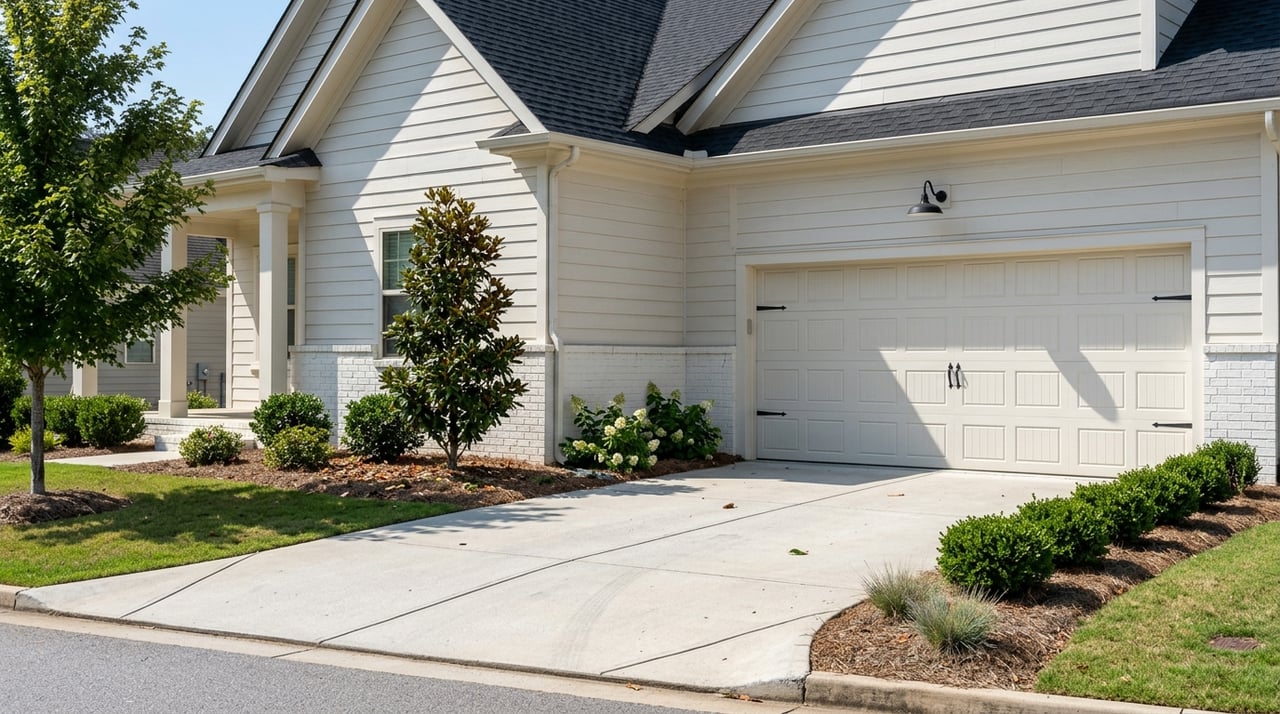
Buying New Construction Versus Resale In Clayton
July 9, 2026
July 9, 2026
If you are trying to decide between a brand-new home and a resale home in Clayton, you are not just comparing floor plans and finishes. You are also comparing timelines, contract terms, inspections, and how the process works under local rules. In a fast-growing market like Clayton, those details can shape your experience just as much as the home itself. This guide will help you understand the tradeoffs so you can make a clearer, more confident choice. Let’s dive in.
Clayton has seen major growth over the last two decades. According to the town, its population increased 277% from 2000 to 2020, and the town says it could double in size again over the next 30 years.
That growth creates more choices for buyers. You may find planned communities with builder inventory, townhomes near downtown, custom-home opportunities, age-restricted new construction, and established resale neighborhoods with existing homes already on the market.
Because of that mix, many buyers in Clayton ask the same question: should you buy new construction or resale? The right answer depends on your budget, your timeline, and how much uncertainty you are comfortable managing during the transaction.
New construction in Clayton can range from large planned communities to smaller custom-home opportunities. Local examples include communities with on-site amenities, homes near downtown, energy-efficient product lines, and neighborhoods that offer design selections or personalization.
For many buyers, the appeal is simple. You may get a home with modern layouts, new materials, current building standards, and fewer immediate repair concerns than an older property.
When you buy new construction, you are often choosing from:
The experience can feel more streamlined in some ways, but it can also be more schedule-driven than resale.
One of the most important local questions is where the home is located. If the property is inside Clayton town limits, single-family detached homes need a zoning compliance permit and a building permit, must be inspected during construction, and cannot be occupied until a certificate of occupancy is issued.
If the home is in unincorporated Johnston County, the process can involve different application requirements. Depending on the property, that may include drawings, a site plan, a septic permit, a county water receipt if applicable, and a lien agent.
That means jurisdiction matters. Before you move forward, you should know whether the home falls under the Town of Clayton or Johnston County process, because that can affect timing and documentation.
A resale home gives you a different kind of opportunity. Instead of waiting on construction progress, you are evaluating a home that already exists, along with its condition, maintenance history, and seller disclosures.
For some buyers, resale offers more certainty on what you are getting on day one. You can walk the property, review visible wear and tear, assess the yard and surroundings, and focus your strategy on disclosure, inspection, and negotiation.
A resale home may appeal to you if you want:
That does not mean resale is simpler in every case. In North Carolina, your due-diligence period becomes a major part of how you protect yourself.
The biggest difference between new construction and resale in Clayton is not always the home itself. It is often the structure of the transaction.
With new construction, timing and builder documentation tend to drive the process. With resale, due diligence, disclosures, and negotiation usually carry more weight.
A new-construction purchase usually depends on build progress and builder timelines. Inspections may need to happen at specific phases, such as before drywall or before final completion, and coordination matters because access may depend on the builder’s schedule.
A final inspection should happen before closing with enough time for issues to be addressed. Even though the home is new, that does not eliminate the need for careful planning.
In North Carolina, the due-diligence period begins on the effective date of the contract. During that window, you can terminate for any reason, and you typically receive your earnest money back, but not the due-diligence fee.
That fee is generally paid to the seller by the effective date and is usually nonrefundable except in rare cases, such as a material seller breach. Because of that, the length of due diligence and how you use that time are important in a resale purchase.
Many buyers assume the list price tells the whole story. In both new construction and resale, that is rarely true.
You will want to look closely at what is included, what costs extra, and what happens if changes come up during the transaction.
Builder contracts often include more paperwork than a resale purchase. Contract packages may include plans and specifications, selection allowance sheets, change-order forms, final-payment terms, and builder warranty language.
That level of detail is important because a base price does not always include every finish, feature, or upgrade you see in a model or marketing materials. You should ask what is standard, what is an upgrade, and how change orders are handled if you want to make adjustments.
With resale, one of the most important sources of information is the North Carolina disclosure process. Sellers may need to disclose items such as the date the dwelling was built, the date the roof was installed, and whether they have been notified by a government agency about zoning, restrictive covenant, or building-code violations, including permit issues.
If the home is in an HOA or planned community, the seller must also disclose dues, assessments, transfer fees, and association-paid services or amenities. Those details can affect your budget more than many buyers expect.
Some buyers mistakenly assume a brand-new home does not need an inspection. Others focus only on the summary page of a report for a resale home. In both cases, that can create avoidable risk.
North Carolina regulates home inspectors, and licensed inspectors must provide a written contract and report. Whether you buy new construction or resale, it is wise to use a licensed inspector and review the full report.
For new construction, ask early whether you can schedule a pre-drywall or phased inspection. That matters because some issues are easier to identify before finishes are complete.
You should also confirm when the final inspection can take place and whether there is enough time before closing for corrections. Inspection timing is one of the biggest coordination points in a new-construction purchase.
In a resale transaction, repair requests are negotiable. The seller is not required to agree, but you may ask for repairs, proceed without them, or terminate during due diligence if the condition is not acceptable to you.
You also have the right to verify repairs and complete a final walk-through. That makes the inspection period one of your most important decision windows.
New construction and resale often handle post-closing repair expectations differently.
With a new home, you will often receive a builder warranty rather than buying a separate home warranty as part of the transaction.
A builder warranty commonly covers permanent parts of the home and may follow a tiered timeline. It often provides about one year for workmanship and materials, two years for major systems, and sometimes up to 10 years for major structural defects.
Before closing, ask what is covered, how long coverage lasts, and what the claim process requires. You should also ask whether the home is being sold with a builder warranty or under different terms.
With resale, you are generally buying an existing home with an existing condition profile. That means your inspection findings, disclosures, and negotiations play a much larger role in setting your expectations for repairs and maintenance after closing.
Instead of relying on a builder’s construction warranty, you are evaluating the home as it stands today.
Whether you lean toward new construction or resale, a few questions can help you compare options more clearly.
Ask these before you commit:
These questions can save you from surprises later.
New construction may be a better fit if you want a more current floor plan, fewer immediate wear-and-tear concerns, and the chance to buy in a developing community. You do need to be comfortable with builder timelines, detailed contract terms, and inspection coordination tied to construction phases.
Resale may be a better fit if you want to evaluate the exact home before you buy, move on a potentially faster timeline, and use due diligence to investigate condition and negotiate repairs or price. You will want to pay close attention to disclosures, inspection results, and community-related costs.
In Clayton, neither path is automatically better. The smart choice is the one that matches your timing, priorities, and tolerance for complexity.
If you are comparing new construction versus resale in Clayton, having clear local guidance can make the process feel much more manageable. Judy Johnson can help you weigh the tradeoffs, understand the contract details, and move forward with confidence.
Stay up to date on the latest real estate trends.
Get assistance in determining current property value, crafting a competitive offer, writing and negotiating a contract, and much more. Contact Judy today to discuss all your real estate needs!